How to Make a Family Screen Time Agreement (Free Printable)
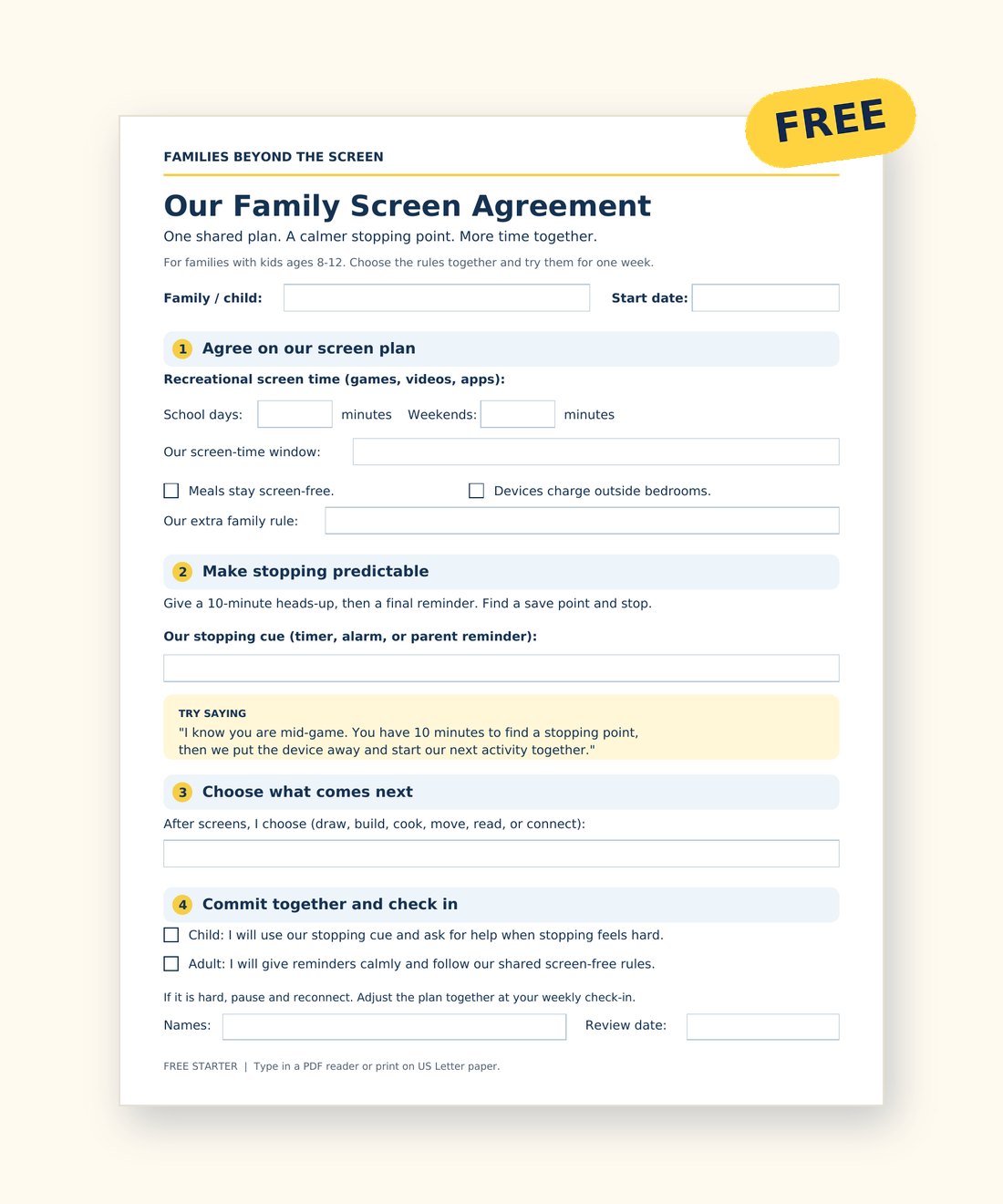
Rules you announce get argued with. Rules you make together get followed. A one-page family screen time agreement turns daily battles into a plan everyone already agreed to.
Why an agreement works better than rules
When screen limits feel like something done to kids, they push back. When kids help set the limits, the agreement becomes the authority, not you. “We agreed on this” is a lot easier to say at 8:30 PM than “Because I said so.”
Keep it to one page. Long contracts get ignored. Try it for one week, then adjust.
Step 1: Agree on your screen plan
Sit down together when everyone is calm, not right after a fight, and decide:
- How many minutes of recreational screen time on school days and on weekends
- Your screen-time window, for example 4:30–5:30 PM after homework
- Screen-free zones and times: many families start with meals staying screen-free and devices charging outside bedrooms
- One extra family rule your child suggests
Step 2: Make stopping predictable
Pick a stopping cue everyone recognizes: a timer, an alarm, or a parent reminder. Agree on a 10-minute heads-up, then a final reminder, then find a save point and stop.
“I know you are mid-game. You have 10 minutes to find a stopping point, then we put the device away and start our next activity together.”
For the hardest moments, read how to get your kid off video games without a fight.
Step 3: Choose what comes next
Have your child write down what they'll do after screens: draw, build, cook, move, read, or connect. When the next step is decided ahead of time, “I'm bored” loses its power. Need ideas? Here are 40 screen-free activities for kids 8–12.
Step 4: Commit together and check in
Both sides make a promise. Your child agrees to use the stopping cue and ask for help when stopping feels hard. You agree to give reminders calmly and follow the same screen-free rules yourself. (Yes, that includes your phone at dinner.)
Sign it, put it on the fridge, and pick a review date one week out. If something isn't working, change it together. That's the point.
Get the free one-page agreement
Everything in this article is on one printable, fillable page: your screen plan, stopping cue, what comes next, and a place for everyone to sign. Enter your email and it lands in your inbox right away.
Email me the free agreementSee the full toolkitQuick answers
What should a family screen time agreement include?
Daily limits for school days and weekends, screen-free times and places like meals and bedrooms, a stopping cue, what your child will do after screens, and a weekly check-in to adjust the plan.
Should kids help write the screen time rules?
Yes. Kids ages 8–12 are much more likely to follow rules they helped choose. Parents still make the final call, but asking for their input turns the agreement into a team plan instead of a punishment.
How much screen time is right for a 10-year-old?
There's no single number that fits every family. Protect sleep, meals, homework, movement, and family time first, then fit recreational screen time around those.